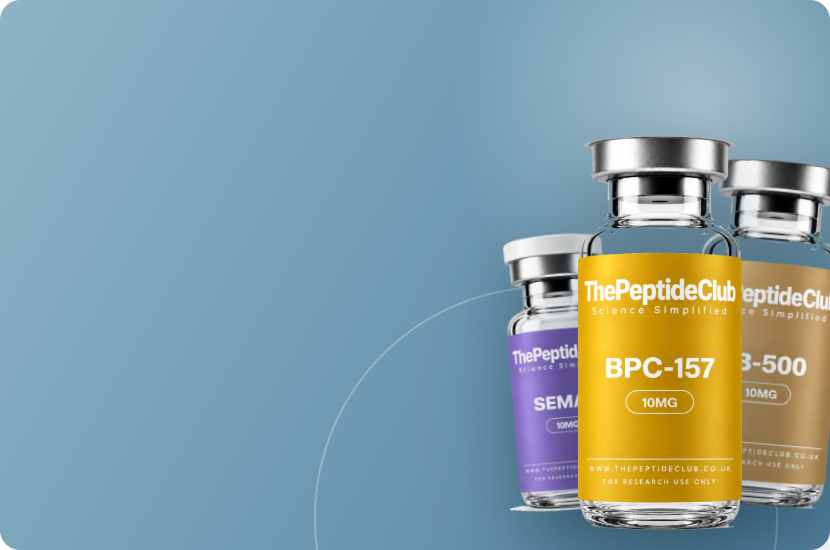
“Cold chain” is a term most people associate with vaccines and fresh food — but it is equally critical in the supply of research peptides. From the moment a batch leaves the manufacturer’s freeze-dryer to the moment it reaches your laboratory freezer, an unbroken chain of temperature control protects the material’s stability. Break that chain, and even a perfectly synthesised peptide can arrive degraded.
This guide explains what the cold chain means for research peptides, why −20°C is the pivotal temperature, and how to judge whether a supplier’s logistics deserve your trust. As throughout, everything here concerns materials supplied strictly for laboratory research use only.
Why −20°C? The Chemistry in Plain Terms
Chemical degradation is driven by molecular motion, and temperature is the dial that controls it. A useful rule of thumb from physical chemistry: reaction rates roughly halve for every 10°C the temperature falls. Moving a peptide from a +20°C warehouse shelf to a −20°C freezer therefore slows degradation reactions — hydrolysis, oxidation, deamidation — by roughly sixteen-fold.
That difference is why −20°C is the industry standard: cold enough to suppress degradation over normal storage periods, yet achievable with standard laboratory and commercial freezers.
Cold Chain in the Supplier’s Warehouse
The chain begins long before dispatch. Responsible suppliers hold their peptide inventory in monitored −20°C freezers, with temperature logging that can demonstrate continuous compliance — not merely a freezer with a dial set hopefully to “cold.”
Good warehouse practice also includes stock rotation (first-in, first-out, so no batch lingers indefinitely), segregation of quarantine stock awaiting quality release, and inventory records linking every vial to its batch number and Certificate of Analysis. These are the unglamorous disciplines that separate professional operations from resellers working out of a spare room. You can read about how a quality-focused UK operation approaches this on our about us page.
Packing for Dispatch: Where Many Chains Break
The handover from warehouse freezer to courier is the most vulnerable link in the chain. Best practice looks like this: vials are picked directly from −20°C storage, packed swiftly into insulated packaging with appropriate coolant, and sealed before the material has time to warm appreciably. The parcel then goes straight into the courier network — not onto a shelf awaiting the next collection.
What matters here is not just the materials but the discipline: insulated boxes, pre-chilled coolant, minimal ambient exposure during packing, and same-day dispatch so parcels spend the least possible time outside controlled storage. When evaluating suppliers, ask how they pack — a company proud of its process will describe it readily, as we do in our FAQs.
In Transit: The Critical Window
Once collected, the parcel is at the mercy of the courier network — which is why the choice of service matters. Tracked 24-hour UK delivery keeps the transit window short enough that insulated packaging easily maintains protective conditions throughout the journey. Every additional day in transit is additional thermal stress, so a supplier offering only slow, untracked shipping is asking you to accept risk for their saving.
The UK climate helps: even in summer, a well-packed insulated parcel easily survives a 24-hour journey. But “easily” depends on the packing being done properly in the first place — which returns us to supplier discipline. Tracking matters too, not just for peace of mind but because it lets you ensure someone is available to receive the parcel and transfer it to your freezer without delay.
Receiving Your Order: Completing the Chain
The cold chain does not end at your loading bay — it ends when the vials are inside your −20°C freezer. Plan receiving accordingly: have someone available on the delivery day, open the parcel promptly, check the contents against the order and the batch documentation, and transfer the vials to frozen storage without detours via a warm office.
A quick visual inspection at this stage is good practice. The lyophilised cakes should look intact, the packaging should feel appropriately cool inside, and the batch numbers should match the certificates. Anything unexpected — damaged packaging, mismatched documentation, compromised vials — should be photographed and raised with the supplier immediately, before the material goes into stock. Browse the shop to see the range dispatched under these standards, or start from our homepage for an overview.
How to Judge a Supplier’s Cold Chain
Before committing to a supplier, run through this checklist:
- Stated storage temperature — do they confirm −20°C warehouse storage?
- Insulated packaging — is every order packed for thermal protection, not just dropped in a jiffy bag?
- Dispatch speed — same-day dispatch before a stated cut-off (e.g. 2pm) minimises ambient exposure.
- Tracked 24-hour delivery — short, traceable transit within the UK.
- Transparency — do they describe their process openly when asked?
A supplier that meets all five is maintaining a genuine cold chain. One that cannot answer these questions is asking you to gamble with your research materials.
FAQs
What is the cold chain for research peptides?
The unbroken sequence of temperature-controlled steps — −20°C warehouse storage, insulated packing, rapid tracked dispatch, and prompt transfer to your laboratory freezer — that keeps peptides stable from supplier to bench.
Why is −20°C the standard rather than room temperature?
Degradation reaction rates roughly halve for every 10°C drop, so −20°C storage slows chemical breakdown roughly sixteen-fold compared with room temperature — while remaining achievable with standard freezers.
What should I do when my peptide order arrives?
Open the parcel promptly, verify contents and batch documentation, visually check the vials, and transfer them to −20°C storage without delay. Report anything unexpected to the supplier immediately.
Disclaimer: All products referenced are supplied strictly for laboratory research use only. They are not for human or veterinary consumption, nor for medical, therapeutic or diagnostic use.