Every research peptide supplier claims quality. Few can prove it. The difference between a claim and proof is independent, third-party batch testing: analysis performed by a laboratory with no commercial interest in the result, documented on a batch-specific Certificate of Analysis that you can inspect before you buy.
For laboratory professionals, understanding what genuine third-party testing looks like — and recognising its absence — is the most reliable way to separate serious suppliers from marketing operations. This guide explains the principles, the paperwork, and the questions that reveal the truth, all in the context of materials supplied strictly for laboratory research use only.
In-House vs Third-Party: Why Independence Matters
There is nothing inherently wrong with in-house quality control — every competent manufacturer tests its own output. The problem is that in-house results carry an unavoidable conflict of interest: the same organisation that profits from selling the material is the one declaring it pure. Most of the time the results are honest; but the buyer has no way to verify that, and the history of the supplement and research-chemical industries contains enough cautionary tales to justify scepticism.
Third-party testing removes the conflict. An independent laboratory — ideally one operating to recognised quality standards such as ISO 17025 — analyses the material and reports what it finds, regardless of commercial convenience. When a supplier voluntarily submits every batch to independent analysis and publishes the results, it is making a statement about its confidence in its own product that no marketing copy can match.
What “Batch Testing” Actually Means
The word “batch” does the heavy lifting here. Peptide synthesis is a chemical process with natural variation: reagent lots change, instruments drift, and yields differ between runs. A certificate generated once, for a single batch two years ago, says nothing about the material in today’s vial.
Genuine batch testing means every production batch is independently analysed, and each batch carries its own certificate with a matching batch or lot number. When your order arrives, you should be able to compare the number on the vial label with the number on the certificate and find them identical. If a supplier offers one generic “representative” COA for its entire catalogue, that is not batch testing — it is decoration.
The Two Pillars: HPLC and Mass Spectrometry
Independent testing is only as good as the methods behind it. For research peptides, two analytical techniques form the non-negotiable core:
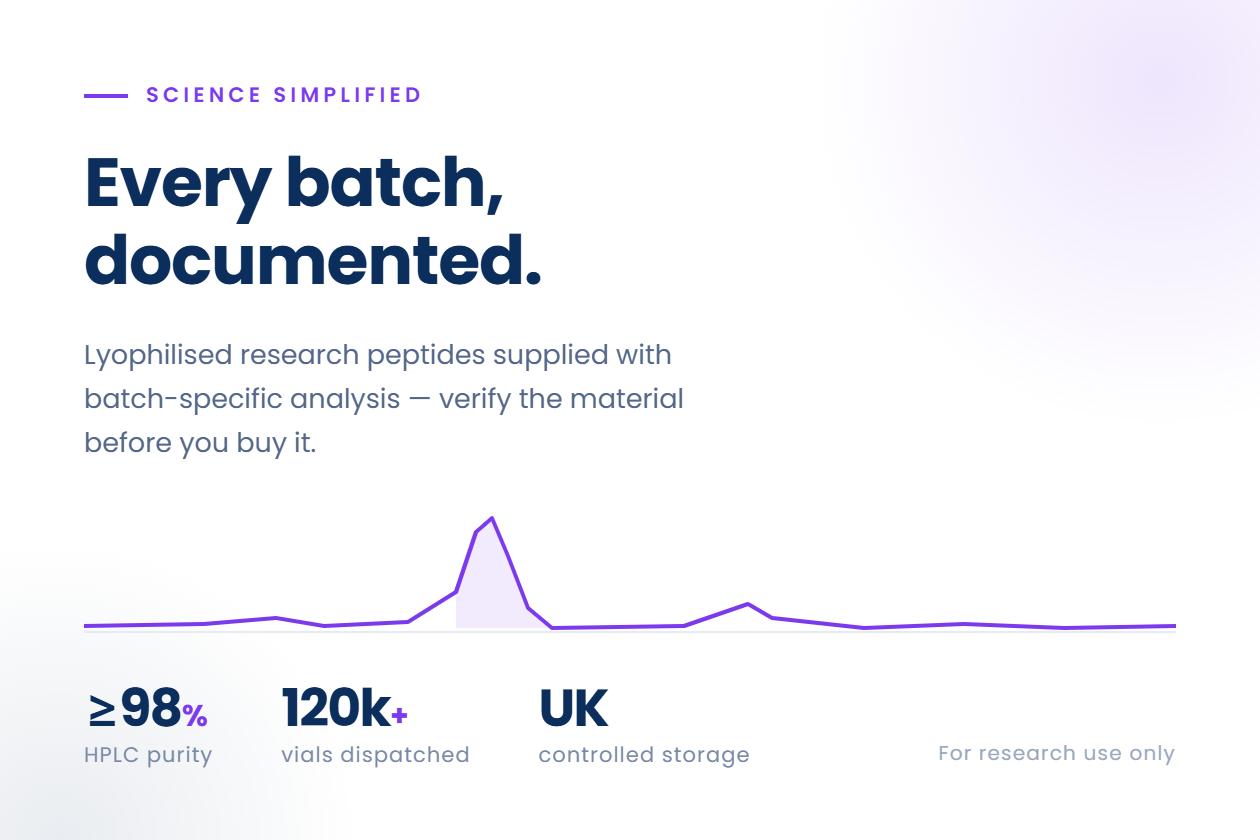
- HPLC (high-performance liquid chromatography) measures purity — the percentage of the material that is the target peptide versus synthesis impurities. The accepted research-grade standard is ≥98%.
- Mass spectrometry (MS) confirms identity — verifying that the measured molecular weight matches the expected amino acid sequence.
A testing regime that reports purity without identity, or identity without purity, is incomplete. Both pillars should appear on every batch certificate, performed by the independent laboratory — not merely transcribed from the manufacturer’s own records. Our FAQs explain how to read these documents section by section.
What Genuine Third-Party Testing Looks Like
When evaluating a supplier, look for this specific combination of evidence:
- A named independent laboratory on the certificate — not “tested in our partner lab” with no name, but an identifiable organisation whose credentials can be checked.
- Batch-specific documentation with matching lot numbers between certificate and product labelling.
- Recent analysis dates consistent with the batch’s production date — not a certificate old enough to vote.
- Full data, not just conclusions — chromatograms and spectra available or referenced, not merely a typed purity figure.
- Consistency across the catalogue — every product, every batch, the same standard. Selective testing of flagship products while the rest go undocumented is a red flag.
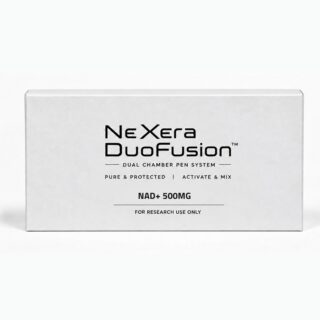
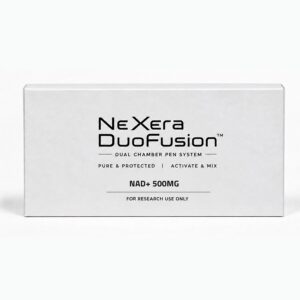
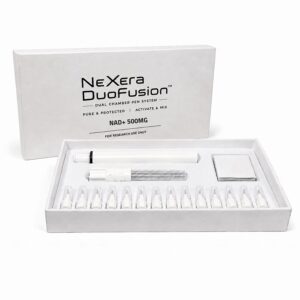
You can see this standard applied in practice across our shop: every product, from the NAD+ 500mg pen system to our vial range, is supplied with its batch-specific certificate. Our about us page describes the testing philosophy behind that commitment.
Red Flags: When Testing Claims Don’t Hold Up
- No certificate available — or one provided only after repeated requests.
- A single shared COA presented as covering all batches or all products.
- No independent laboratory named anywhere in the documentation.
- “100% purity” claims — analytically meaningless and a hallmark of dishonest marketing.
- Certificates that never change — identical documents, identical dates, across supposedly different batches.
- Defensiveness when you ask reasonable questions about the testing. Reputable suppliers welcome scrutiny; you can contact us with any documentation query and receive a straight answer.
FAQs
What does third-party testing mean for peptides?
It means each production batch is analysed by an independent laboratory with no commercial interest in the outcome, and the results are published on a batch-specific Certificate of Analysis showing HPLC purity and mass spectrometry identity data.
Is in-house testing worthless?
No — competent manufacturers test their own output as a matter of course. But in-house results alone carry a conflict of interest, which is why independent verification is the stronger evidence a buyer can rely on.
How do I verify a COA matches my product?
Check that the batch or lot number on the certificate is identical to the number on your vial or pen labelling, and that the analysis date is consistent with recent production. Mismatches or missing numbers invalidate the document.
Disclaimer: All products referenced are supplied strictly for laboratory research use only. They are not for human or veterinary consumption, nor for medical, therapeutic or diagnostic use.