Browse any research peptide supplier and you will see the same figure repeated like a mantra: ≥98% purity by HPLC. It is the industry’s shorthand for “research grade” — but what does the number actually measure, what makes up the remaining two per cent, and why should a claim of 100% send you running? This guide unpacks the most quoted number in peptide supply, in plain language for laboratory professionals.
As with all our content, the context here is strictly laboratory research: these are analytical materials for in-vitro work, supplied for laboratory research use only — never for human or veterinary consumption.
What HPLC Actually Measures
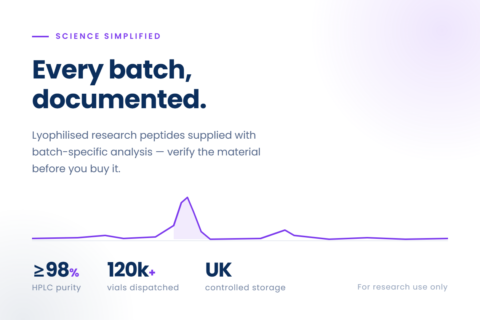
High-performance liquid chromatography separates the components of a mixture by passing them through a column packed with a stationary phase. Different molecules travel at different speeds depending on their chemistry, emerging at different times and producing a chromatogram: a series of peaks along a time axis, where each peak represents a distinct component.
The purity figure is derived from peak areas. The area under the main peak — the target peptide — is expressed as a percentage of the total area of all detected peaks. A result of “98.7% by HPLC” therefore means that 98.7% of the material detected by the instrument’s detector is the intended peptide, and 1.3% is something else. It is a relative measurement of the detected mixture, and understanding that relativity is the key to interpreting the number honestly.
What “≥98%” Means — and What the Other 2% Is
The “≥” symbol matters: it denotes a minimum specification, not an exact value. A batch reported at 98.4% and a batch at 99.2% both meet a ≥98% specification; both are research grade. Suppliers state the threshold rather than marketing the highest number because batch-to-batch variation is a normal feature of chemical synthesis, and honest specifications acknowledge it.
So what comprises the remaining fraction? Primarily peptide-related impurities: truncated sequences where synthesis stopped early, deletion sequences missing one amino acid, and side products of protecting-group chemistry. These are close chemical relatives of the target — not random contamination — and at trace levels they are an expected, well-understood feature of synthetic peptides. Residual moisture and counter-ions from purification (such as trifluoroacetate) may also be present; these affect the powder’s weight rather than its chromatographic purity, which is why certificates distinguish purity from net content.
Purity vs Identity vs Content: Three Different Things
Much confusion arises from conflating three distinct measurements that a complete Certificate of Analysis reports separately:
- Purity (HPLC) — what fraction of the detected material is the target peptide. Answers: “How clean is it?”
- Identity (mass spectrometry) — whether the material is actually the stated compound, confirmed by matching measured molecular weight to the expected sequence. Answers: “Is it what the label says?”
- Content — how much peptide mass is present, accounting for moisture and counter-ions. Answers: “How much is there?”
A product can be 99% pure yet misidentified (wrong sequence, beautifully clean), or correctly identified but only 85% pure. Only the combination of all three measurements fully characterises the material — which is why a certificate showing HPLC data without mass spectrometry, or vice versa, is incomplete. Our FAQs walk through reading these documents section by section.
Why “100% Pure” Is a Red Flag
If ≥98% is the standard, why not demand 100%? Because no analytical method can certify absolute purity. Every detector has a detection limit; impurities below that threshold are invisible to the instrument, not proven absent. A claim of 100% purity therefore reveals one of two things: the claimant does not understand analytical chemistry, or they are comfortable misleading customers. Neither inspires confidence.
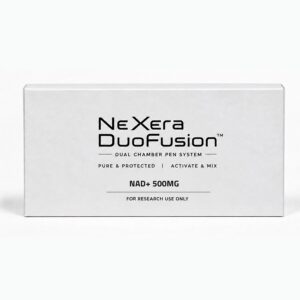
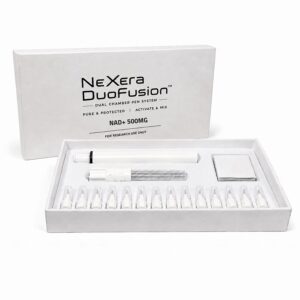
Legitimate laboratories report measured values — 98.3%, 99.1% — with chromatograms to support them. That honesty about the last fraction of a per cent is precisely what makes the rest of the certificate believable. When you see “100% pure” on a supplier’s website, read it as a signal about the supplier rather than the product, and look at the NAD+ 500mg documentation in our shop to see what credible reporting looks like.
Does Higher Purity Matter for Your Research?
Within the research-grade band, the practical significance of small differences is often overstated. The gap between 98.1% and 99.3% rarely determines experimental success; what matters far more is knowing the actual figure and having it documented. Reproducibility — the foundation of credible science — depends on characterised materials, and a documented 98.4% beats an undocumented claim of “high purity” every time.
Where purity genuinely matters is at the extremes: material well below 95% can introduce enough impurities to interfere with sensitive assays or confound analytical method development. That is an argument for verified ≥98% material from a documented batch — not for chasing ever-higher numbers, and certainly not for paying premiums based on purity marketing. You can read about our testing standards and what we document for every batch on our about us page.
FAQs
What does ≥98% HPLC purity mean?
It means at least 98% of the material detected by HPLC is the target peptide, with the remainder comprising trace-level synthesis-related impurities. The “≥” denotes a minimum specification acknowledging normal batch-to-batch variation.
What is the difference between purity and net content?
Purity is the fraction of detected material that is the target peptide; net content is the actual peptide mass present, accounting for residual moisture and counter-ions. A complete COA reports both separately.
Should I worry about the impurities in a 98% pure peptide?
At research grade, the small impurity fraction consists of closely related synthesis by-products at trace levels — normal and expected. What matters is that the figure is measured, documented and batch-specific, not the pursuit of ever-higher numbers.
Disclaimer: All products referenced are supplied strictly for laboratory research use only. They are not for human or veterinary consumption, nor for medical, therapeutic or diagnostic use.