
Peptides are short chains of amino acids — the same molecular building blocks that make up proteins — and they have become indispensable tools across modern laboratory research. From biochemistry and cell biology to analytical chemistry and materials science, research peptides serve as reference materials, assay controls and investigational compounds in strictly controlled laboratory environments.
In the UK, specialist suppliers provide these compounds as lyophilised (freeze-dried) research materials, sold exclusively for laboratory research use only — never for human or veterinary consumption. If you are new to the field, this guide explains what research peptides are, how they are produced, and what distinguishes a high-quality research material from a poor one.
Peptides vs Proteins: Understanding the Basics
Both peptides and proteins consist of amino acids linked together by peptide bonds. The distinction between them is largely a matter of size: peptides are generally defined as chains of fewer than fifty amino acids, while longer chains fold into the complex three-dimensional structures we call proteins.
This size difference matters a great deal in the laboratory. Shorter chains are simpler to synthesise at high purity, easier to characterise with analytical instruments, and more predictable in defined experimental systems. These practical advantages are a major reason peptides have become such widely used research tools.
The Building Blocks: Amino Acids
There are twenty standard amino acids that appear in natural peptides and proteins. Each has distinct chemical characteristics: some are hydrophobic, some carry positive or negative charges, and some contain reactive side chains. The combination and order of these units determine how a peptide behaves in solution, how it interacts with analytical columns, and how stable it remains during storage.
Two points are worth noting for anyone evaluating research materials:
- Chirality matters. Natural peptides use left-handed (L) amino acids almost exclusively, and reputable synthesis replicates this.
- Modifications are common. Terminal modifications such as acetylation or amidation protect chain ends from degradation and form part of the defined specification.
How Research Peptides Are Manufactured
Most research peptides are produced by solid-phase peptide synthesis (SPPS), a technique developed in the 1960s. The growing chain is anchored to a resin support while protected amino acids are added one at a time, building the sequence step by step.
After synthesis, the crude peptide is cleaved from the resin and purified — typically by preparative HPLC — to remove truncated sequences and side products. It is then freeze-dried (lyophilised) into the stable powder that laboratories receive.
Quality-focused suppliers verify every production batch with independent analytical testing and publish a batch-specific Certificate of Analysis documenting HPLC purity and mass spectrometry identity data. If you have never reviewed one of these documents, our FAQs explain what documentation you should expect from a reputable supplier.
Why Laboratories Use Peptides
Research peptides serve across a wide range of laboratory applications:
- Reference standards. In analytical chemistry, peptides of known identity and purity calibrate instruments and validate methods.
- Immunoassay development. Peptides serve as antigens for antibody production and as controls in ELISA and related techniques.
- Receptor and binding studies. In pharmacology and biochemistry research, peptides are used to probe receptor interactions in cell-based and cell-free systems.
- Method development. Chromatographers and mass spectrometrists use well-characterised peptides to develop and troubleshoot separation methods.
In every application, data reliability depends directly on material quality — an impure or misidentified peptide can invalidate weeks of laboratory work.
What “Research Use Only” Means
The phrase “for laboratory research use only” is a formal designation, not a casual disclaimer. It means the material is supplied solely as a laboratory reagent for in-vitro research and analytical work. Such products are not medicines, are not manufactured as pharmaceutical products for human use, and must never be consumed by humans or animals or applied for medical, therapeutic or diagnostic purposes.
Responsible UK suppliers enforce this designation strictly — including age verification (21+) and clear labelling — and provide proper documentation with every order. Read more on our about us page.
Evaluating Quality Before You Buy
Not all research peptides on the market meet the same standard. Before placing an order with any supplier, check for these quality indicators:
- Batch-specific Certificates of Analysis showing HPLC purity data — reputable suppliers target ≥98% purity — with the chromatogram available to review.
- Mass spectrometry identity confirmation verifying that the measured molecular weight matches the expected sequence.
- Matching batch and lot numbers between the certificate and the labelling on the vial or pen you receive.
- Independent third-party testing rather than in-house analysis alone.
Red flags include missing documentation, unrealistic “100% purity” claims, no verifiable company address, and marketing language that hints at human use.
Common Formats: Vials and Pen Systems
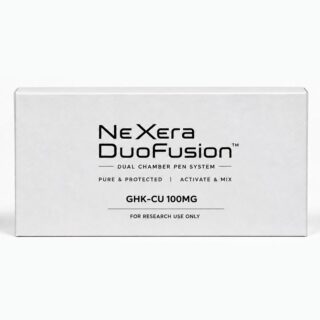
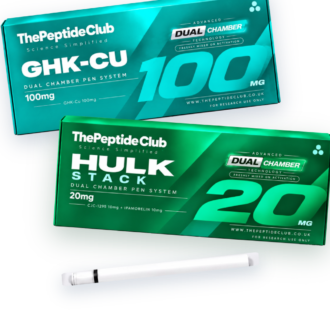
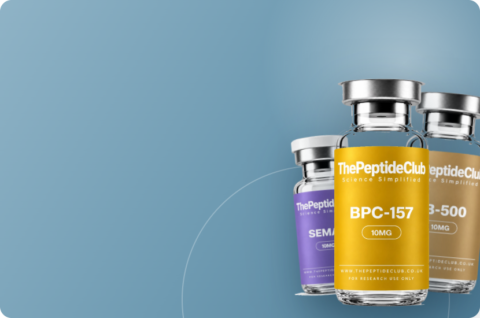
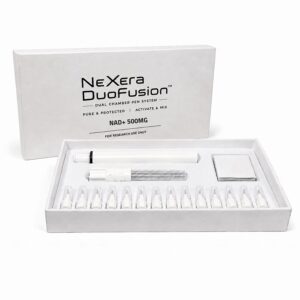
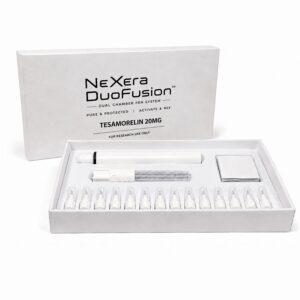
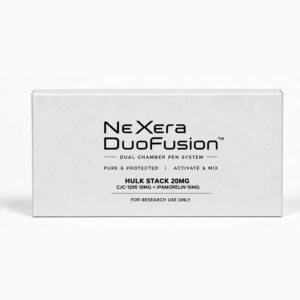
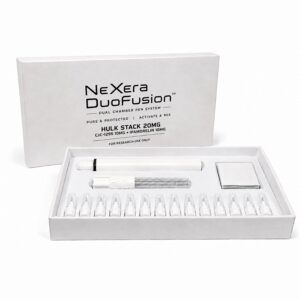
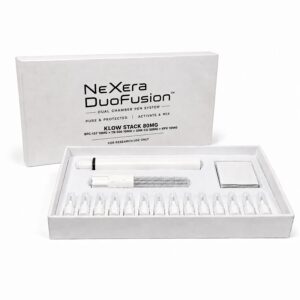
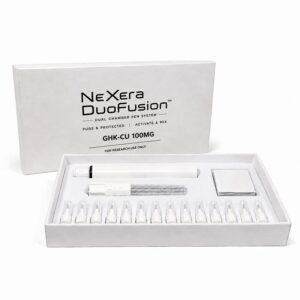
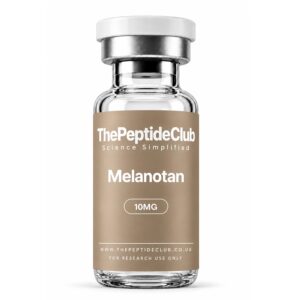
Research peptides are commonly supplied as lyophilised vials — the traditional, widely compatible format — or as dual-chamber pen systems designed for convenient laboratory handling. Both are dispatched with cold-chain handling to protect stability in transit.
You can browse the complete range of research peptides, formats and batch documentation in our shop.
FAQs
Are research peptides the same as medicines?
No. Research peptides are laboratory reagents supplied strictly for in-vitro research use only. They are not medicines, are not approved for human or veterinary use, and are not manufactured as pharmaceutical products.
What does lyophilised mean?
Lyophilised means freeze-dried. The peptide is frozen and water is removed under vacuum, leaving a stable dry powder that resists degradation far better than a solution — which is why freeze-drying is the standard format for research peptides.
How do I know a peptide supplier is legitimate?
Look for batch-specific Certificates of Analysis with HPLC and mass spectrometry data, transparent UK contact details, a clear research-use-only policy with age verification, and tracked, cold-chain dispatch. Our FAQs list exactly what to check before ordering.
Disclaimer: All products referenced are supplied strictly for laboratory research use only. They are not for human or veterinary consumption, nor for medical, therapeutic or diagnostic use.